
Viktor Schmidt · 12 September 2026
Analyzing Shifts in Search Engine Rankings Following Service Provider Transitions in Digital Marketing Strategies
Understanding Service Provider Transitions
Service provider transitions in digital marketing often involve switching between SEO agencies, hosting platforms, or content management vendors, and these changes create measurable effects on search engine rankings according to multiple industry analyses. Researchers at various institutions have documented how shifts in backlink management, server configurations, and content delivery networks coincide with temporary or sustained ranking movements. Data from search engine optimization studies shows that domain authority signals and crawl frequency patterns frequently adjust when responsibility for technical implementation moves to a new team.
Key Factors Driving Ranking Changes
Technical elements such as site speed, mobile responsiveness, and structured data implementation come under new oversight during transitions, which leads to variations in how search engines evaluate page quality. Observers note that URL structure alterations or canonical tag inconsistencies introduced during handovers sometimes trigger indexing delays. Studies indicate that when providers change, metadata optimization and internal linking architectures receive fresh attention, producing both positive and negative ranking outcomes depending on the execution quality.
Backlink profiles represent another area of impact, because new providers may pursue different outreach strategies or audit existing links for relevance and authority. Evidence from longitudinal tracking reveals that sudden changes in anchor text distribution or the addition of links from previously unused domains correlate with ranking volatility in competitive niches. Those who monitor these patterns find that disavow file updates or link removal campaigns conducted mid-transition further influence how algorithms assess site trustworthiness.
Timing and External Influences Around September 2026
September 2026 marked a period when several major algorithm refinements rolled out across major search engines, coinciding with numerous reported service provider switches in the digital marketing sector. Figures from analytics platforms reveal that sites undergoing migrations during this window experienced amplified ranking fluctuations compared to earlier months. Analysts attribute part of this to overlapping updates in core web vitals evaluation and E-E-A-T signals, which placed additional scrutiny on sites experiencing infrastructure changes at the same time.
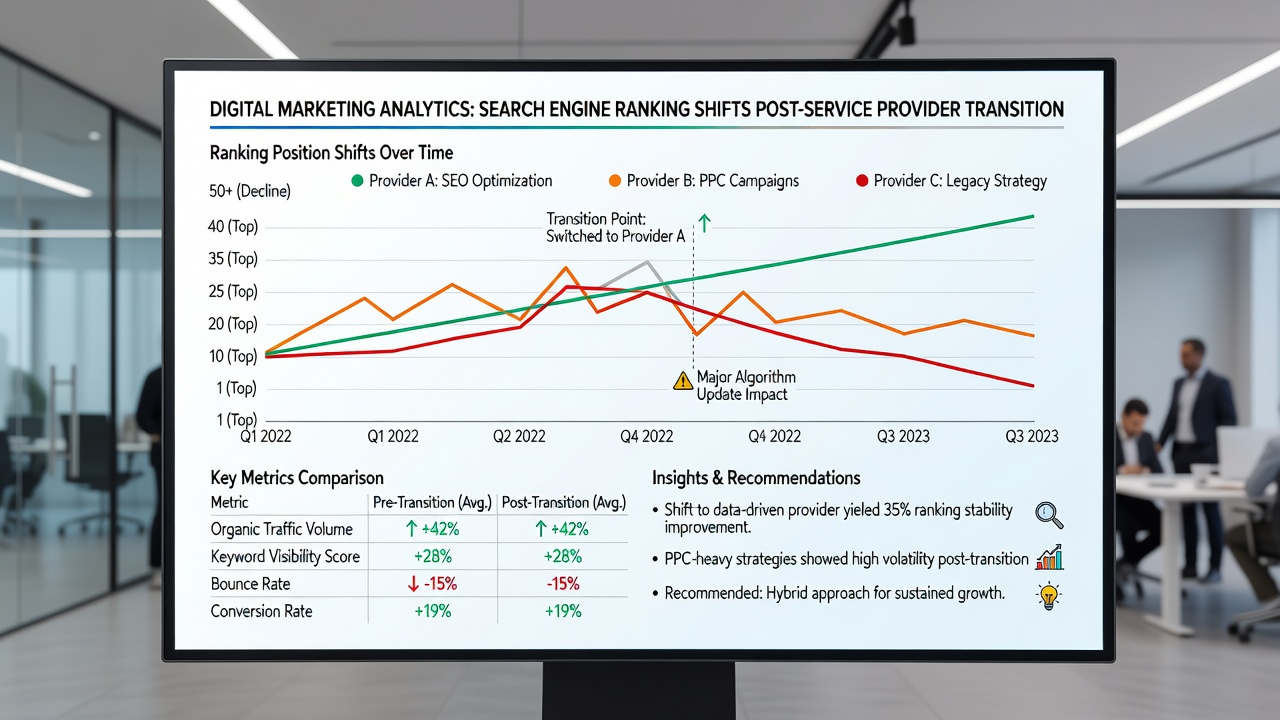
Market data collected through that period shows increased instances of crawl budget redistribution following server migrations, especially among e-commerce and news domains that rely on frequent content updates. Research indicates that providers implementing gradual redirects and maintaining consistent sitemap submissions helped mitigate some of the sharper drops observed elsewhere.
Measurement Approaches and Data Sources
Professionals track ranking shifts using a combination of third-party tools and direct search console data to isolate transition-related effects from broader algorithm movements. Comparative analysis before and after provider changes allows teams to identify whether declines stem from lost backlinks, altered page load times, or content freshness issues. Reports from academic and industry collaborations demonstrate that multivariate testing during transitions provides clearer attribution than simple before-and-after snapshots.
One documented case involved an enterprise site that switched hosting providers in early 2025, resulting in a temporary 12-position average drop across monitored keywords before recovery within eight weeks after technical optimizations. Another example tracked by researchers highlighted how a content platform's agency change led to improved rankings once the new team addressed duplicate content problems inherited from the previous setup. Such instances illustrate the range of outcomes possible depending on the scope of changes introduced.
Strategies Observed in Practice
Organizations that maintain detailed transition plans, including phased implementation of redirects and parallel monitoring of key metrics, tend to experience shorter periods of ranking instability. Coordination between outgoing and incoming providers on elements like robots.txt files and hreflang tags reduces the likelihood of indexing interruptions. Data shows that sites preserving historical performance benchmarks through the process recover faster when issues arise.
Collaboration with platforms such as Google's developer documentation offers guidance on migration best practices that many teams reference during provider handovers. Additional insights appear in reports from organizations like the Australian Competition and Consumer Commission, which has examined digital marketing practices and their effects on consumer-facing sites across the region.
Conclusion
Service provider transitions in digital marketing continue to produce observable shifts in search engine rankings through a combination of technical, content, and authority-related factors. Ongoing monitoring and structured handover processes help organizations manage these changes, while external events such as algorithm updates in periods like September 2026 can intensify the effects. Continued collection of performance data remains essential for understanding long-term patterns following such transitions.