Otto Peters · 26 September 2026
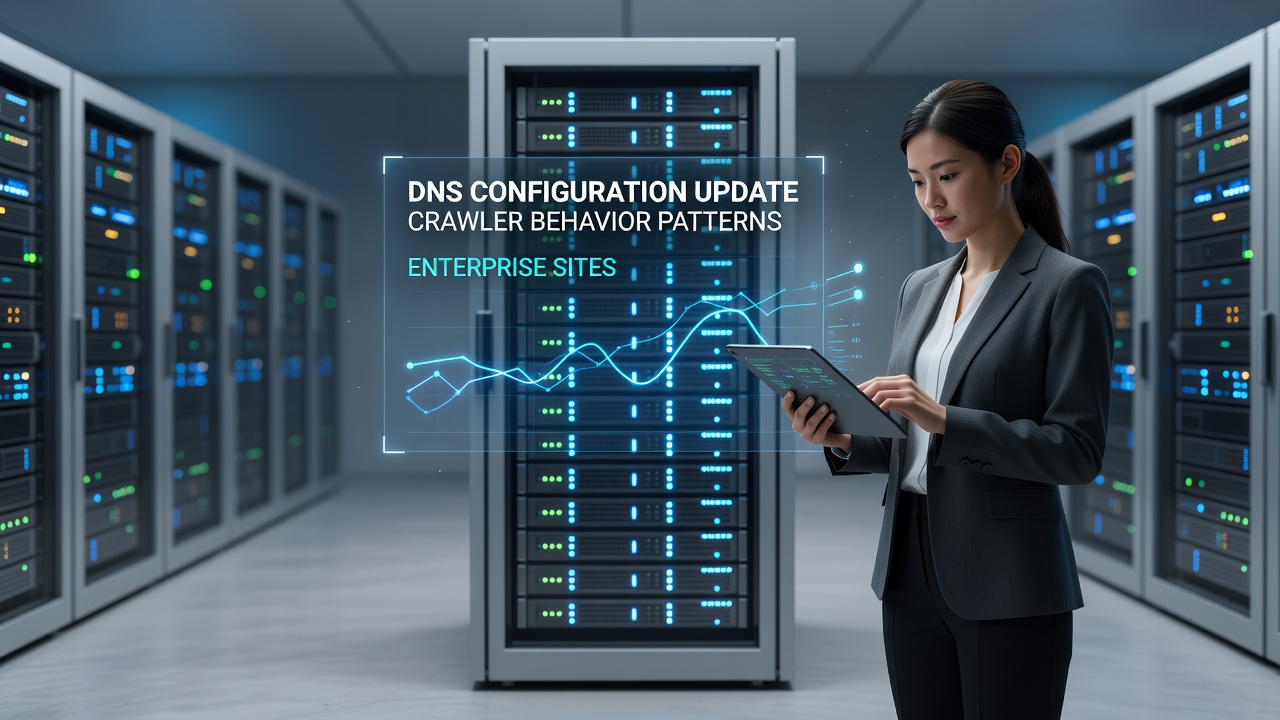
Investigating Crawler Behavior Patterns Following DNS Configuration Updates in Enterprise Sites
Enterprise sites frequently adjust DNS configurations to improve performance, enhance security, or migrate infrastructure, and these changes trigger measurable shifts in how automated crawlers interact with web resources. Observers note that propagation delays often create temporary inconsistencies between authoritative records and cached resolver data, which in turn influences request timing and path selection by indexing systems. Studies from research institutions indicate that crawlers do not respond uniformly, because some rely on fresh DNS lookups while others retain older entries for extended periods during the transition window.
Core Mechanics of DNS Changes and Crawler Interaction
When administrators update A or CNAME records, the time-to-live values determine how quickly distributed systems adopt the new information, yet crawlers operate under their own caching policies that sometimes extend beyond standard TTL limits. Data shows that major search engine bots typically re-query DNS within minutes to hours after detecting anomalies in response headers or connection failures, whereas smaller or specialized crawlers may wait longer before refreshing. Researchers discovered that enterprise environments with global traffic distribution experience staggered adoption rates across regions, creating pockets where legacy IP addresses remain active while new endpoints begin receiving requests.
Those who monitor server logs during these periods frequently record clusters of 404 errors followed by successful fetches once propagation stabilizes, and the pattern repeats across multiple update cycles. Evidence suggests that configuration updates involving anycast networks produce different behaviors compared with traditional unicast setups, because anycast routing can direct traffic to the nearest node before DNS fully converges.
Documented Patterns from Large-Scale Observations
Analysis of request timing reveals that crawler volume often dips immediately after a DNS change and then rebounds with increased frequency as new records propagate. One study revealed that peak re-crawling activity occurs between six and eighteen hours post-update in most monitored enterprise domains, although outliers extend to forty-eight hours when international resolvers are involved. Figures reveal higher retry rates on HTTPS endpoints when certificate mismatches coincide with DNS shifts, prompting additional validation steps by security-focused crawlers.

But here's the thing: not all crawlers treat the same domain identically, since some prioritize robots.txt revalidation immediately after an IP change while others continue along previously mapped paths. Data collected in September 2026 across several multinational sites showed that European-based crawlers adopted updated records faster on average than those operating from North American resolver pools, a difference attributed to varying peering arrangements and cache refresh intervals. Academic reports from institutions in Australia further confirm that regional latency differences compound these effects when enterprise sites rely on multi-CDN architectures.
Methods Used to Track and Analyze Behavior
Investigators combine DNS query logs with web server access records and application-layer metrics to reconstruct crawler paths before and after each configuration event. This approach allows correlation between specific record changes and shifts in user-agent frequency, response codes, and crawl depth. Tools that export resolver cache states provide additional visibility into which external systems still hold stale entries, enabling precise measurement of propagation completion across the internet. Research indicates that combining these datasets with timing information from certificate transparency logs yields clearer pictures of when crawlers first encounter new endpoints.
Enterprises that implement structured logging during planned updates capture the exact sequence of events, and repeated observations across dozens of migrations have produced consistent statistical profiles. Those profiles help predict the duration of reduced crawl rates and the subsequent surge that often restores or exceeds baseline indexing activity within two days.
Conclusion
Comprehensive examination of crawler responses following DNS configuration updates demonstrates clear, repeatable patterns tied to propagation timing, regional resolver behavior, and individual crawler policies. Organizations that maintain detailed monitoring during these transitions gather actionable data on request volume, error rates, and recovery timelines. Continued collection of such metrics supports more accurate forecasting of indexing impacts and helps refine operational procedures around infrastructure changes.