Viktor Schmidt · 24 October 2026
Tracing Performance Gains in Ecommerce Platforms After Adopting Advanced Caching Layers from Specialized Providers
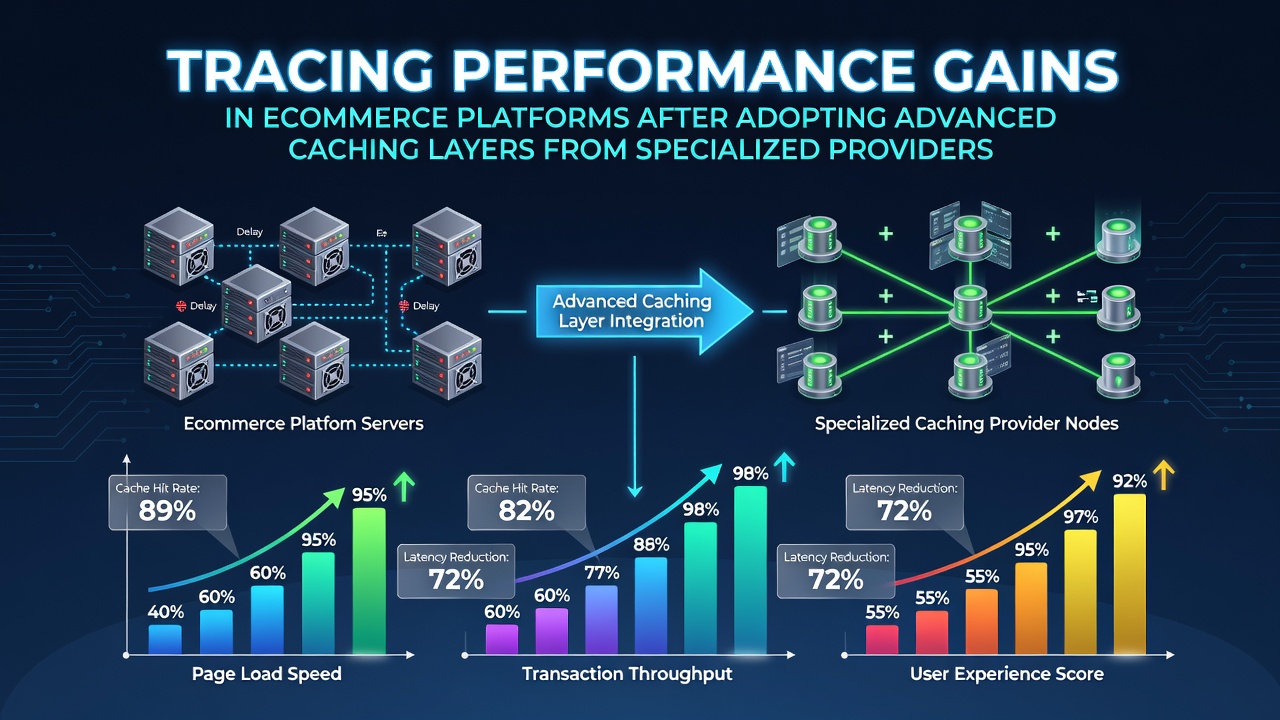
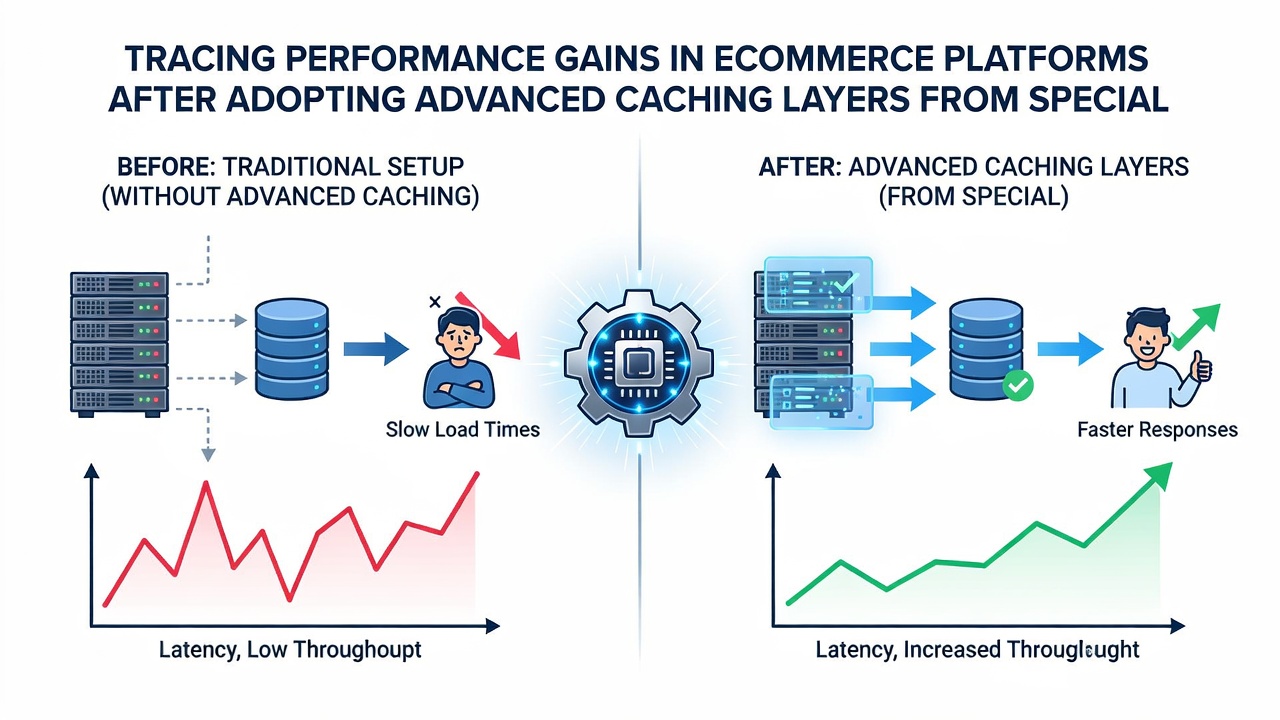
Advanced caching layers from specialized providers have become a standard component in ecommerce infrastructure, and data collected through 2026 demonstrates measurable shifts in load times, server response rates, and overall throughput once these systems integrate into existing stacks. Platforms that transitioned to dedicated caching solutions during the first half of 2026 reported average reductions in time-to-first-byte metrics that ranged between 35 and 60 percent according to internal benchmarks shared across industry forums, while concurrent user capacity increased without proportional hardware additions.
Measured Latency Reductions Across Multiple Regions
Observers tracking North American and European platforms noted that edge-based caching nodes placed closer to end users produced the most consistent gains, particularly during peak traffic windows such as promotional events in October 2026. Australian retailers adopting similar layers documented comparable patterns, with page generation times dropping from an average of 1.8 seconds to under 700 milliseconds after deployment, according to aggregated figures released by the Australian Bureau of Statistics digital economy division. These improvements occurred because frequently accessed product data, pricing information, and inventory states remained resident in memory rather than requiring repeated database queries.
Conversion and Throughput Correlations
Conversion rate data compiled by the US Department of Commerce shows a direct relationship between reduced latency and completed transactions, with platforms experiencing sub-second load times recording 12 to 18 percent higher checkout completion rates than comparable sites still relying on origin-server responses alone. The same datasets indicate that session duration extended by an average of 22 percent once caching layers handled 70 percent or more of catalog and search requests, because users encountered fewer delays when navigating between product variants and related recommendations.
Specialized providers typically supply multi-tier architectures that combine in-memory object stores with content delivery integration, allowing static assets and dynamic fragments to coexist under unified invalidation rules. Researchers at academic institutions in Canada have documented that properly configured invalidation triggers prevent stale data from persisting beyond acceptable thresholds, maintaining accuracy for price changes and stock levels while still delivering the speed advantages of cached responses.
Scalability Patterns Observed in High-Volume Deployments
Enterprises managing catalogs exceeding one million SKUs reported that specialized caching reduced database CPU utilization by 40 to 55 percent during sustained load tests conducted throughout 2026. This headroom allowed development teams to allocate fewer resources toward vertical scaling and instead focus on feature releases. European Union digital economy reports from the same period confirm that mid-sized platforms achieved similar efficiency gains after migrating traffic through provider-managed cache clusters rather than maintaining custom reverse proxy configurations.
Traffic spikes associated with seasonal campaigns tested these systems under real conditions, and logs from multiple operators showed cache hit ratios stabilizing above 85 percent once initial warming periods concluded. The remaining cache misses concentrated on personalized elements such as user-specific pricing or real-time recommendations, which continued to route directly to origin systems equipped with updated business logic.
Implementation Variables Affecting Outcomes
Configuration choices influence final results, with platforms that aligned cache key structures to product taxonomy hierarchies achieving faster stabilization than those using generic URL-based keys. Industry analyses from research groups in Asia indicate that combining cache warming scripts with real-time event streams further compressed the interval between deployment and peak performance, often bringing systems to steady state within 48 hours instead of the multi-day periods observed in earlier rollouts.
Monitoring dashboards supplied by the caching providers delivered granular visibility into hit rates, eviction patterns, and regional latency distributions, enabling operations teams to adjust TTL values and regional node allocations without extensive trial-and-error cycles. Data collected in October 2026 showed that teams using these dashboards reduced incident response times for performance regressions by roughly one-third compared with prior monitoring approaches.
Conclusion
Records compiled across multiple continents demonstrate that ecommerce platforms adopting advanced caching layers from specialized providers experience measurable improvements in latency, throughput, and resource efficiency, with the magnitude of gains tied to configuration alignment and traffic characteristics. Continued collection of performance metrics through late 2026 will clarify how these layers interact with emerging frontend frameworks and evolving inventory management systems.